A New Paradigm for On-Site Registration, 'Multi-Venue Registration' : If There Are Three Venues, Do You Need Three Registration Desks? (WCE 2025 Case Study)
Korea's first multi-venue registration case where FAIRPASS integrated 3 BEXCO spaces & 5 events with 40 kiosks at WCE 2025. Learn how to connect multiple events and spaces with one registration dataset.
Badge Issuance at the Nearest Kiosk, Anywhere in the Venue
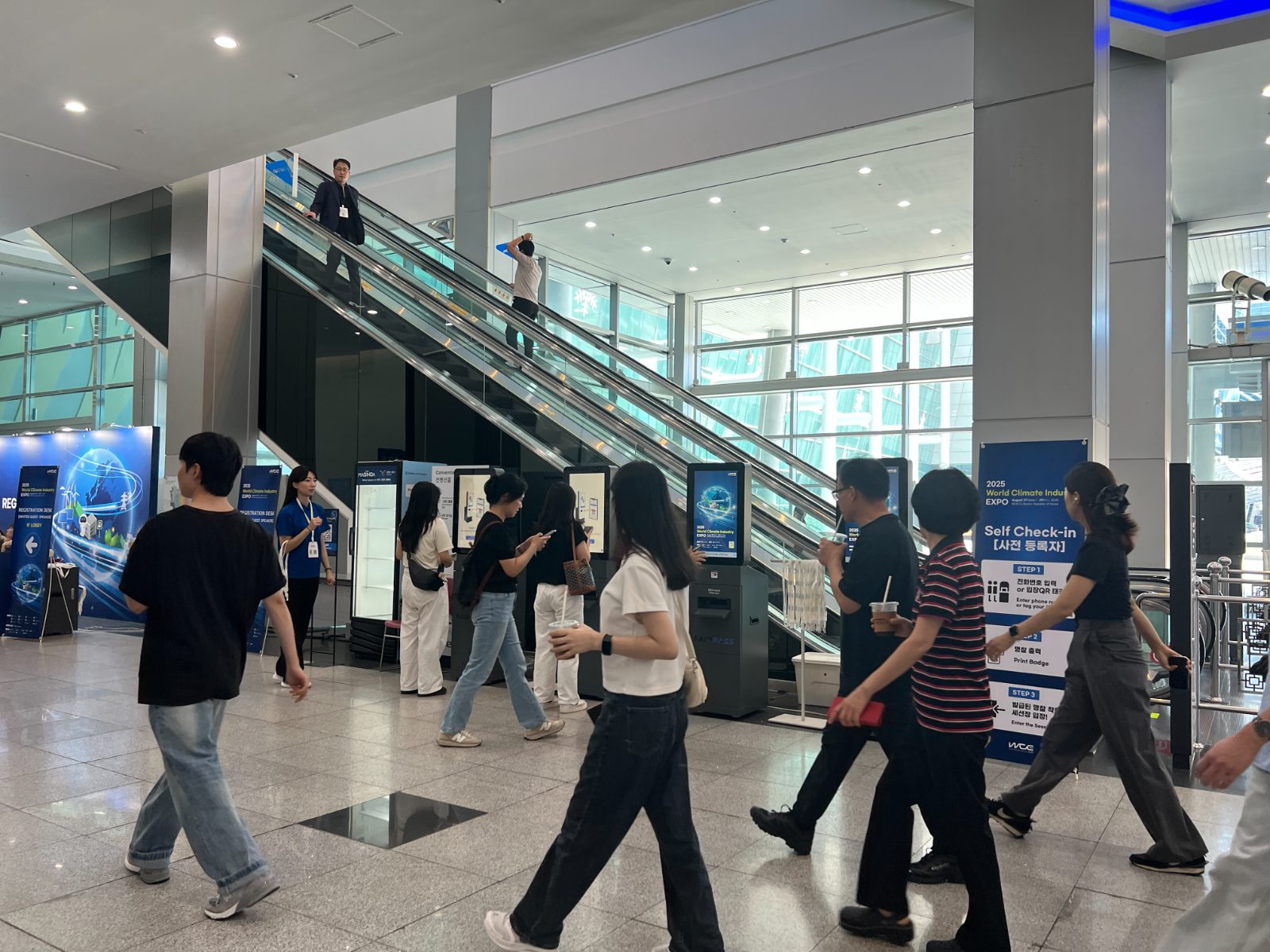
August 2025, the 2025 World Climate Industry EXPO (WCE 2025) held at BEXCO in Busan.
Co-hosted by the Government of the Republic of Korea, the International Energy Agency (IEA), and the World Bank (WB), this event was a large-scale international event with over 20,000 attendees, held simultaneously across BEXCO’s Convention Hall, Exhibition Hall 1, and Exhibition Hall 2. Five events were operated simultaneously across three major spaces, and participants who registered for one event were able to freely enter other events as well.
For anyone in charge of registration, this part would be the biggest concern:
“How can we check in a large number of participants quickly and without bottlenecks?”
Under the conventional approach, participants would need to go to the registration desk of the event they registered for and complete their registration.
Even in a case like this event, where the badge from one registered event also grants access to other events.
- Convention Hall participants → Convention Hall registration desk
- Exhibition Hall 1 participants → Exhibition Hall 1 registration desk
- Exhibition Hall 2 participants → Exhibition Hall 2 registration desk
However, this approach brings clear inconveniences from the participant’s perspective.
| Problems with Conventional Multi-Venue Registration | Inconveniences for Participants |
|---|---|
| Separate registration desk operations per space or event | Must first locate and go to the registration desk of the event they registered for |
| Risk of data omission due to separate participant data management per event | Bottlenecks caused by non-unified data management per event |
| Need to re-register at a different event after moving | Complex movement routes and longer registration check-in times |
The reason this was the only way was due to structural limitations such as event data management, participant categories, and badge design.
The larger the event grows and the wider the space becomes, the more the registration itself forces a structure that dictates participants’ movement routes.
FAIRPASS approached this problem in reverse.
Rather than making participants go find the registration desk, what if registration was already at the place participants enter?
We Did Not Concentrate Registration in One Place — Strategy of Distributing 40 Kiosks
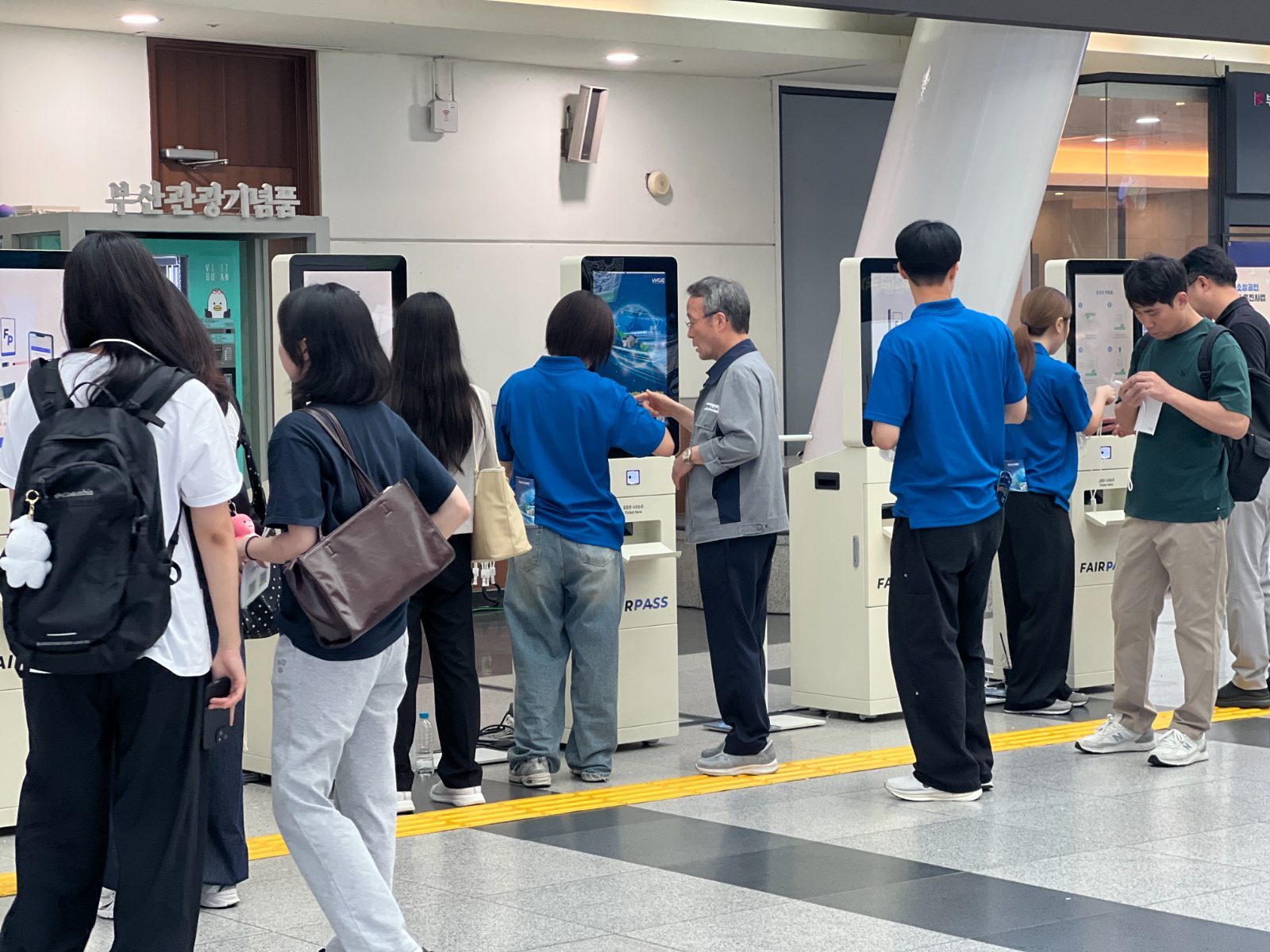
At WCE 2025, FAIRPASS distributed approximately 40 unmanned kiosks across all BEXCO spaces and major entrances.
However, the core of this strategy was not the number of kiosks.
What mattered was that all kiosks were connected to a single, integrated participant database.
Actual Flow of Distributed Deployment Operations
Participant online pre-registration
        ↓
FAIRPASS integrated data server (single participant DB)
        ↓
Real-time synchronization with kiosks across all BEXCO spaces
        ↓
QR scan at any entrance → Immediate badge printing
Thanks to this structure, the following experiences became possible.
- Participants who entered through the Convention Hall first → Badge printed immediately at the Convention Hall entrance kiosk
- Participants who went directly to Exhibition Hall 1 → Issued in the same way at the Exhibition Hall 1 kiosk
- Participants who entered through the Exhibition Hall 2 entrance → Processed on the spot without any separate movement
Where the registration desk for the event you registered for was located no longer mattered.
Because wherever participants entered, the registration system was already there.
One Registration, Multiple Venues — Definition of Multi-Venue Registration Operations
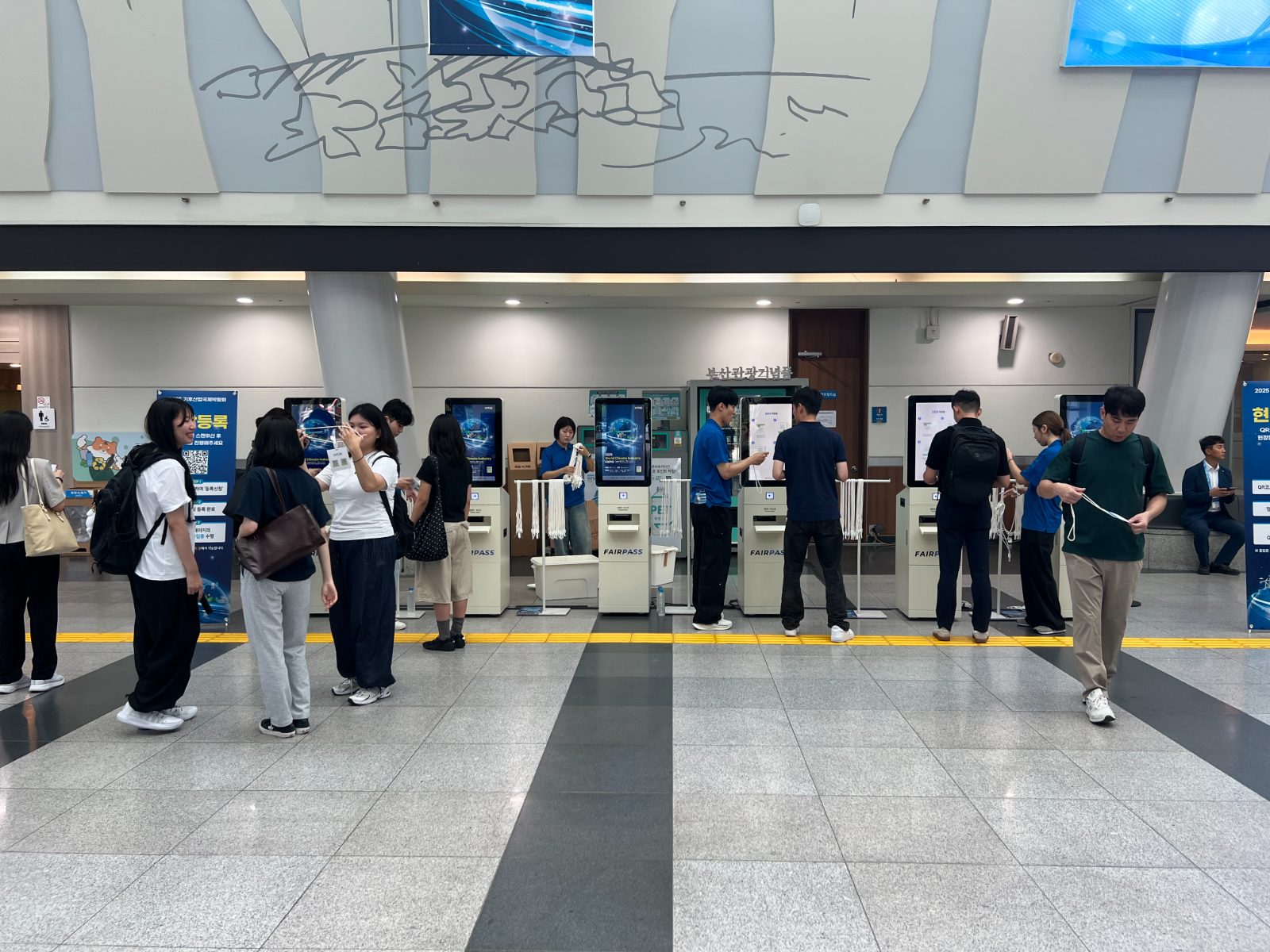
FAIRPASS defines this model as **‘Multi-Venue Registration.’
A method of providing the same registration and issuance experience across multiple events and multiple spaces, regardless of badge design and participant category, based on a single registration dataset.
Concretely, it operates with the following structure:
| Stage | Conventional Method | Multi-Venue Registration Operations |
|---|---|---|
| Pre-registration | Individual registration per event | 1-time integrated registration |
| On-site check-in | Visit designated registration desk | Use the nearest kiosk |
| Check-in time | Check-in time delayed due to bottlenecks | Participant check-in distributed |
| Data management | Separated per event, separate aggregation required | Real-time automatic integration and data synchronization |
A structure where one registration leads to one badge, and that single badge allows participants to move across multiple events and multiple spaces.
WCE 2025 marked Korea’s first implementation of the Multi-Venue Registration model.
It Was Not the Kiosks — ‘Data Connection’ Was the Core
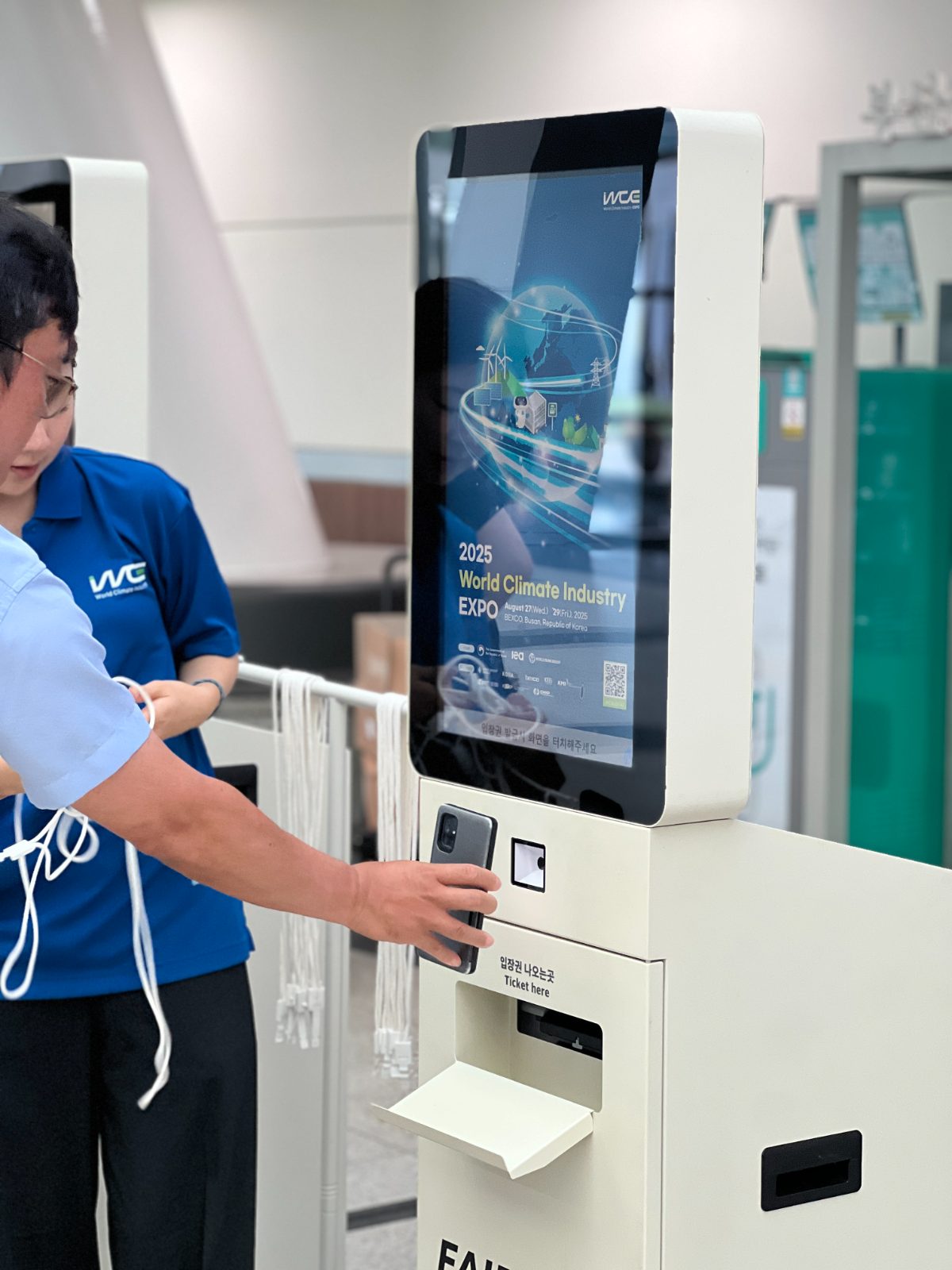
In multi-venue operations, the kiosk is merely a tool. The true core is online registration data, the on-site operations system, kiosks, and badge issuance being seamlessly connected in a single flow.
Without this connection, no matter how many kiosks are deployed, participants will ultimately still have to find the registration point for the event they registered for.
The Integrated Infrastructure FAIRPASS Provided at WCE 2025
- ✅ Online registration platform — Pre-registration data collection and integrated management of participant information
- ✅ Real-time data synchronization — 40 kiosks connected to a single server, with access to the same data from any device
- ✅ Unmanned check-in kiosks — Participant identification and check-in completed with a single QR scan
- ✅ Immediate on-site badge printing — 100% eco-friendly paper badges printed in full on the spot with no waiting
- ✅ Integrated operations dashboard — Real-time, at-a-glance monitoring of participant status across all spaces
FAIRPASS does not simply provide equipment that prints badges.
It builds an event operations infrastructure that connects everything from online registration to on-site check-in and badge issuance through a single data flow.
WCE 2025 was the case that verified that potential at an actual large-scale international event.
With FAIRPASS, the Scale of Your Event Becomes Your Strength
Multi-venue events, simultaneous conferences, large-scale exhibition fairs. The more complex the event, the more the design of registration operations determines the overall quality of the event.
FAIRPASS proved it through WCE 2025.
That even as the scale grows larger, if the data is connected, the participant experience can actually become simpler and smoother.
- Is your event large in scale, or is the venue split across multiple locations?
- Are there multiple sessions or programs being operated simultaneously?
- Are you experiencing difficulties with registration queues and managing desk staff?
Please contact us now to find out how FAIRPASS’s Multi-Venue Registration Operations solution can be applied to your organization’s event.
FAQ
Q. What is Multi-Venue Registration?
Multi-Venue Registration Operations is a method of providing the same check-in and badge issuance experience across multiple event venues or multiple spaces, based on a single online registration dataset. Participants do not need to find a specific registration desk; they can receive their badge immediately at the nearest kiosk at any entrance. FAIRPASS implemented this method for the first time in Korea at WCE 2025 (2025 World Climate Industry EXPO).
Q. How should registration desks be operated when there are multiple venues?
Traditionally, separate registration desks are operated per space, but in this case participants must identify their registration location in advance, and bottlenecks occur in participant registration. FAIRPASS’s multi-venue solution distributes kiosks at the entrance of each space and connects all devices to a single participant database, implementing a structure where registration and issuance are possible at any entrance. At WCE 2025, this method was used to distribute and operate 40 kiosks across all BEXCO spaces.
Q. What is the difference between unmanned kiosk check-in and conventional registration desk operations?
The conventional registration desk method is a structure where operations staff are stationed to look up the participant list and manually distribute badges. In contrast, FAIRPASS unmanned kiosks automatically verify identity with a single QR scan and print the badge immediately on-site. Staff costs can be reduced while significantly cutting waiting times, and the real-time integrated dashboard allows simultaneous monitoring of entry status across all venues. Particularly in a multi-venue environment, the data synchronization structure makes operational efficiency even higher than a single desk.
📬 Contact Us
FAIRPASS is ready to support your next event, whenever you need us.
fairpass@fairpass.world
Changing one badge can simultaneously elevate operational efficiency, environmental responsibility, and brand value.
Ready to streamline your next event?
Get a free consultation — no commitment required.
Get a free quote →